A popper rating tells you how much popcorn the machine can produce under specified conditions. A production target tells you how many saleable bags have to leave the line each shift. To size an industrial popcorn production line, start with the bags and work backward through packing, cooling, coating and popping.
Start with finished bags per shift
Suppose your target is 6,000 bags at 100 g each. That is 600 kg of finished popcorn per shift. If an eight-hour shift includes two hours for warm-up, cleaning and flavor changes, the line needs to average 100 kg of finished product per running hour. At that bag weight, the packing station needs to release about 17 acceptable bags per minute on average. Use your own observed downtime and reject rate when comparing equipment.
Keep kernel, popped and finished weights separate
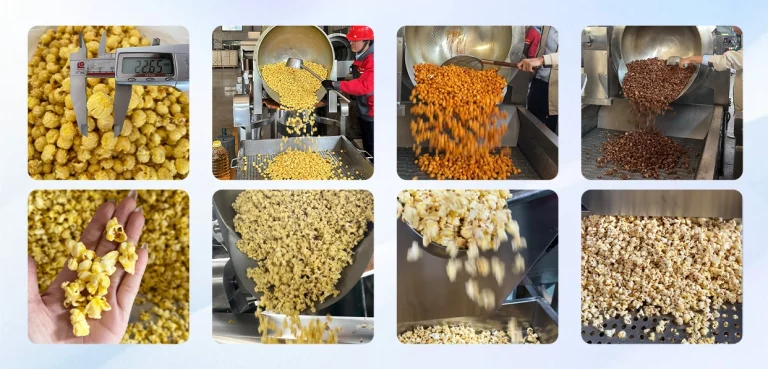
A quotation may list raw kernel input, popped output or finished coated output in kg/h. Ask the supplier to identify the basis for each number. For caramel popcorn, use a trial batch to weigh the uncoated popcorn and the saleable finished product separately. Record coating pickup along with losses from unpopped kernels, fines and screening. Then use the trial yield to estimate the raw kernel requirement for your recipe.
Check what happens between batches
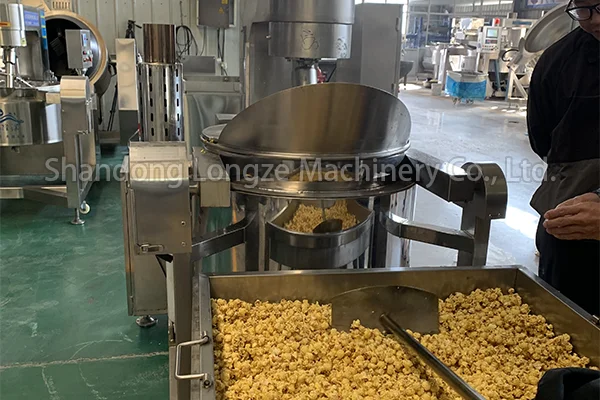
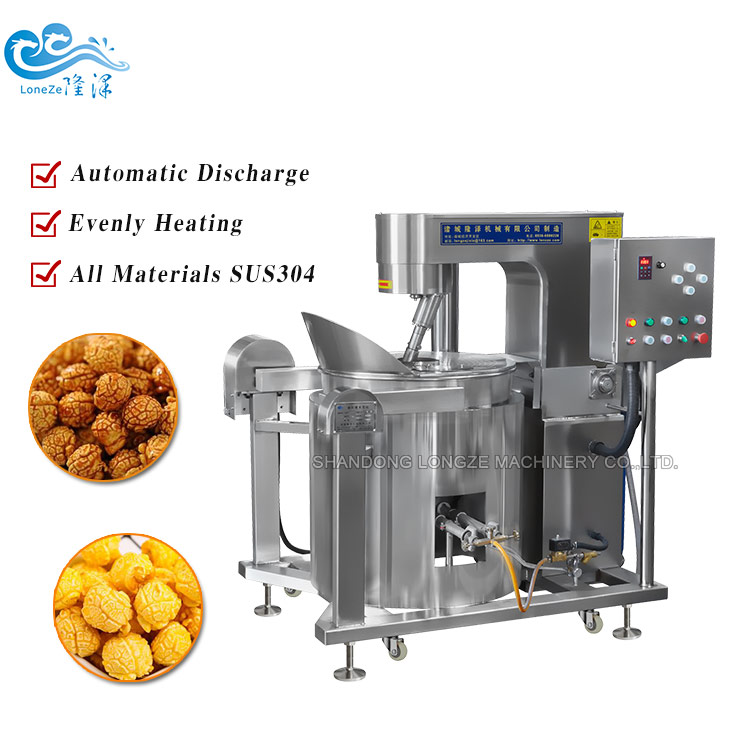
A batch popper can discharge a large volume in a short burst. Confirm that the receiving conveyor or buffer can take a full discharge and that the cooler and packer can clear the product before the next batch accumulates. If the product is still tacky when it reaches the weigher, check cooling time and product depth on the conveyor during a trial. Include the coater and packer in the test when comparing an industrial popcorn production line with a standalone industrial spherical popcorn machine.
Ask for a timed run with your product
Give the supplier your kernel type, recipe, bag weight, target bags per shift and planned flavor changes. Ask for a timed run that records raw input, saleable packed output, rejects and the time spent waiting between stages. For coated popcorn, check for clumps and breakage at the packing station. A run with your intended recipe and bag format gives you a common basis for comparing quotes and shows which station limits output.
What does the line capacity mean for smaller bags?
At the same 100 kg/h finished-product target, switching from 100 g to 50 g bags doubles the requirement from roughly 17 to 34 acceptable bags per minute. Ask the packaging supplier to run your smallest bag with your actual popcorn. Check whether the weigher can deliver the required portions without crushing the product and whether the bag can be filled and sealed at that speed. If packed output falls short, improving the packing stage may add more saleable output than buying a larger popper.
When does caramel popcorn need a separate coating stage?
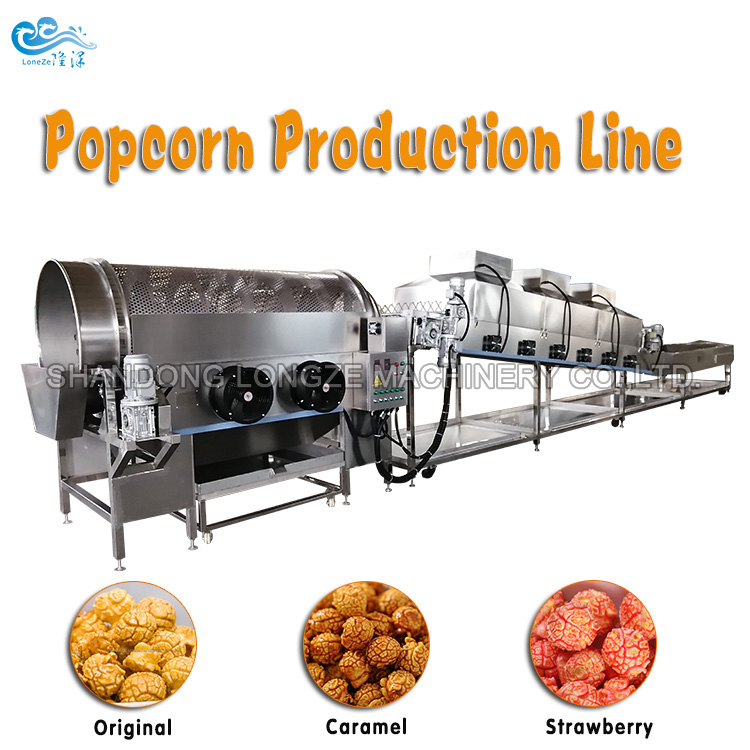
For a recipe designed for in-kettle flavoring, test whether the popper can handle ingredient addition, mixing and discharge consistently. If your recipe calls for applying prepared caramel after popping, include syrup preparation and a separate coating step when sizing the line. Run your kernel type and recipe through separation, cooling and screening before assessing clumps, broken pieces and unpopped kernels at the packing station. See the Longze caramel popcorn line configurations for examples of post-popping equipment.
Will the production line fit your workshop?
Longze’s published layout examples pair one popper with a 7 m line, two with 9 m, three with 10 m, and four or five with 14 m. Use those lengths as a starting point for a layout drawing. Ask for the installed footprint including ingredient stations and packing equipment, then allow space for operator access, cleaning, maintenance and moving finished goods. For multiple poppers, ask whether the layout supports staggered discharge and whether the shared downstream equipment can clear each batch in time.
What should you send when requesting a quote?
Send your target bags per shift, bag weights, product and kernel types, recipe or coating method, actual running hours, available floor space and utilities. Identify any cooler, conveyor or packer you already own. Ask for an itemized scope showing where the line starts and ends, a layout drawing with service clearances, and a proposed trial that measures acceptable packed output. If you are comparing heating options, see gas versus induction popcorn machines. You can also send Longze your production requirements for a configuration review.