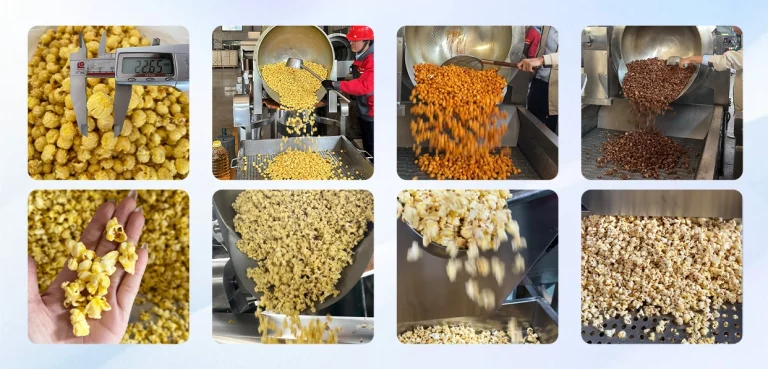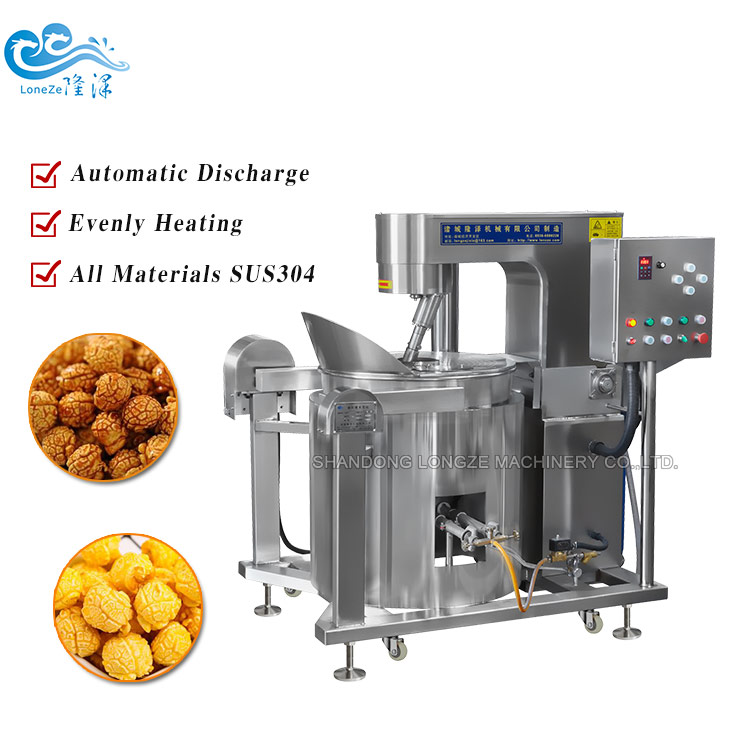
For bagged caramel popcorn, start your trials with mushroom kernels. The popped pieces tend to be rounder and hold up better during mixing and transfer. Butterfly popcorn gives a lighter, more irregular bite, which can be a good fit for salted or lightly seasoned snacks. If you want that texture in a caramel product, run it through your actual coating and packing process before choosing it.
Which kernel should you buy for each product?
Caramel-coated retail bags: Start with a mushroom variety. Check the percentage of round pieces after popping as well as after coating. Lightly seasoned or cinema-style popcorn: Trial butterfly kernels if an airy texture and irregular shape are part of the product. Two products on one line: Ask the supplier to demonstrate both kernel lots and record the settings for each. The kernel variety influences the shape, and the trial shows how consistently your popper produces it.
When requesting samples, tell the kernel supplier how you pop and coat the product. Compare expansion, unpopped kernels and piece integrity using the same sampling method. Expansion matters for bag fill, while breakage and screening losses affect how much of a batch you can sell. The American Chemical Society’s popcorn guide explains how the two popped shapes differ.
Can one industrial popcorn machine run both types?
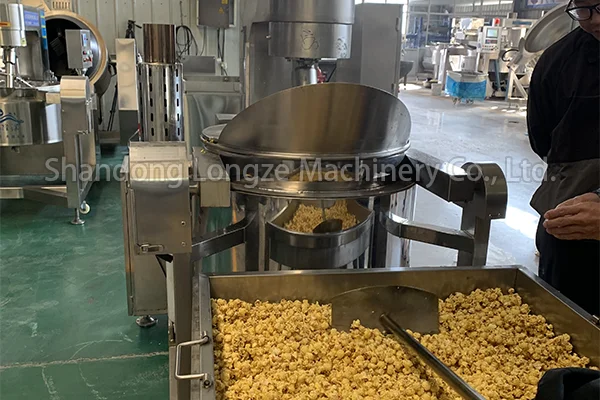
Some industrial oil poppers can process both kernel types. Ask for a demonstration on the exact machine you plan to buy, using representative kernel lots. Check whether separate batch settings are needed for loading, heating, stirring and discharge. If the same machine will run sweet and savory products, include the changeover in the trial and check which surfaces need cleaning between lots.
Do you need a separate caramel coater?
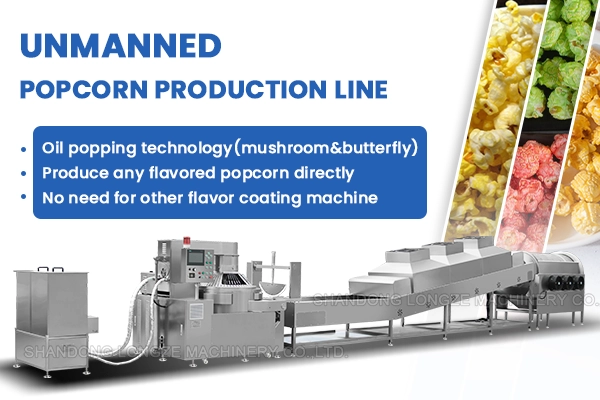
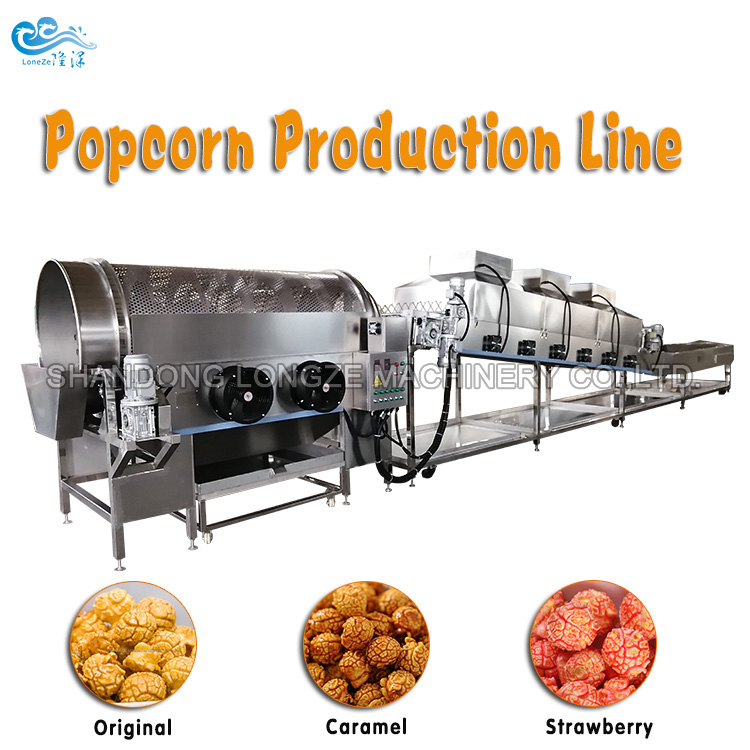
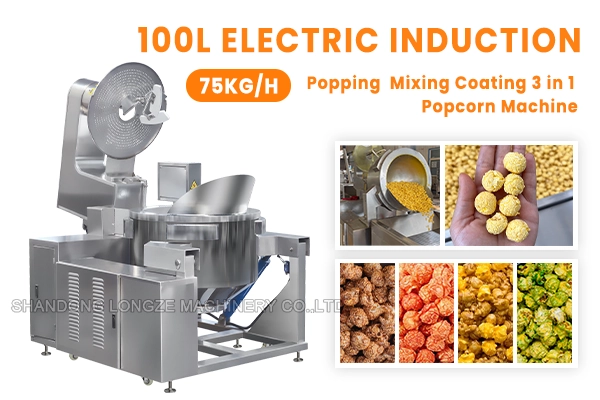
For a recipe designed for in-kettle flavoring, have the supplier demonstrate ingredient addition, mixing and discharge in the same batch. For a recipe that applies cooked caramel after popping, ask for a separate coating step and confirm how syrup is prepared and fed. For either route, check the popcorn after separating, cooling and screening. Inspect whether clusters separate without excessive breakage and whether the pieces feed cleanly into the weigher. See the Longze machine configurations for mushroom and butterfly popcorn for examples of popper options.
Where is the popcorn breaking?
Collect equal-weight samples after popping, after coating and from finished bags. Use the same definition of broken pieces for each sample. If breakage first rises after coating, check mixer loading, agitation and how the batch is discharged. If it rises between cooling and packing, inspect transfer drop heights, guide rails and the weigher feed. If bags contain sticky clusters, compare samples at cooler discharge and at packing to see where clumps first appear. Change one setting at a time and record the result.
What should a supplier trial measure?
Agree on acceptable limits for broken pieces, unpopped kernels, clumps and coating uniformity before the run. Ask the supplier to record kernel lot, raw kernel input, screened rejects, acceptable packed output and elapsed running time. Use your actual bag size and retain a labeled sample from each run for comparison.
For example, two trial batches could each produce 12 kg before final sorting. If one leaves 0.6 kg of rejects and the other leaves 1.8 kg, the saleable totals are 11.4 kg and 10.2 kg. That is a 1.2 kg difference per batch in this illustrative comparison. Use measured saleable output and your actual run time when you size the popcorn production line.
What should you send with an equipment inquiry?
Send your target product, kernel samples or supplier specification, caramel application method, bag sizes and target saleable bags per shift. Note whether you already have a coater, cooler or packer. Ask the supplier to identify which stations are included, which recipes will be demonstrated, and where they will collect trial samples. You can send Longze your product and trial requirements to discuss a suitable configuration.