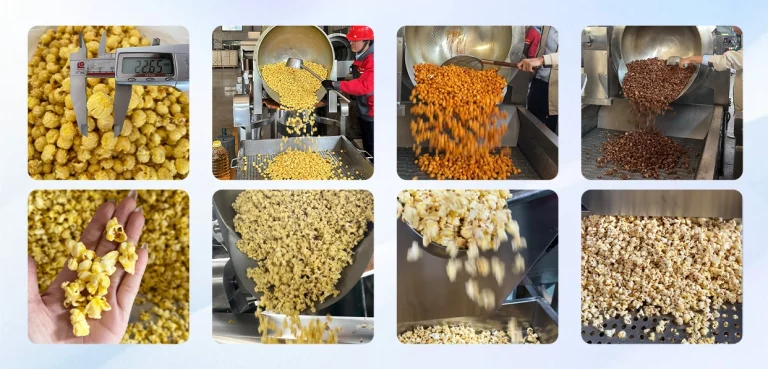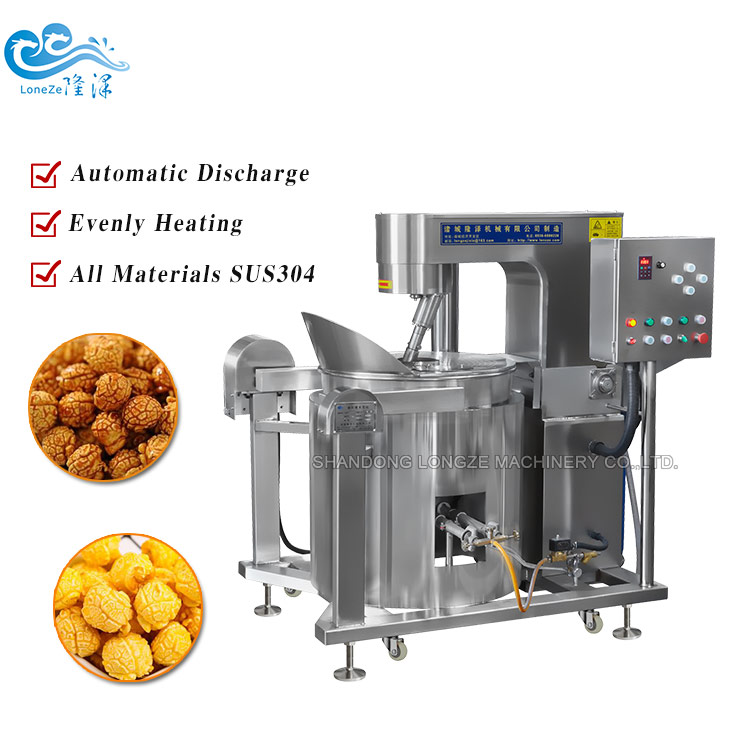
For an industrial caramel popcorn machine, start with the 100 L induction model if its measured output covers your orders and you frequently switch flavors. Consider the 200 L model if you run longer production runs of the same recipe and your cooling, screening and packing equipment can handle each discharge. Kettle volume describes the vessel. The number to buy against is the weight of saleable popcorn you can pack per hour with your own recipe.
100 L vs. 200 L: Compare the quoted specs
| Longze induction model | Published output | Listed power | When to trial it |
|---|---|---|---|
| 100 L | 75 kg/h | 23 kW | Several flavors or shorter production runs |
| 200 L | 130 kg/h | 43 kW | Long runs and a downstream line sized for larger discharges |
The figures come from the Longze induction popper specifications. Confirm whether the supplier weighed plain popped corn, coated popcorn before screening, or saleable product after screening. Coating adds weight, and screening takes weight out. Confirm your plant voltage, frequency and phase. Ask the supplier to state the full line’s connected load on the quote. The listed kW figure describes equipment power. To compare operating costs, measure kWh per saleable kilogram during each trial.
Measure the full cycle and the output you can sell
Time from the start of one load to the start of the next. Include ingredient loading, popping, discharge and any waiting for the receiving conveyor. Weigh the product after cooling and screening, and record unpopped kernels, broken pieces and clusters you would reject. Start with the same kernel lot and caramel recipe on both machines. If your product shape is still open, see how to compare mushroom and butterfly popcorn in a coating trial.
Suppose a trial yields 7.2 kg of saleable product per cycle. At six minutes from load to load, that is 72 kg/h. If a backed-up cooler adds one minute per cycle, the same batch yields about 62 kg/h. These are example figures. Repeat the trial over consecutive batches at operating temperature, and account for warm-up and cleaning separately when estimating shift output.

Check what happens when the kettle empties
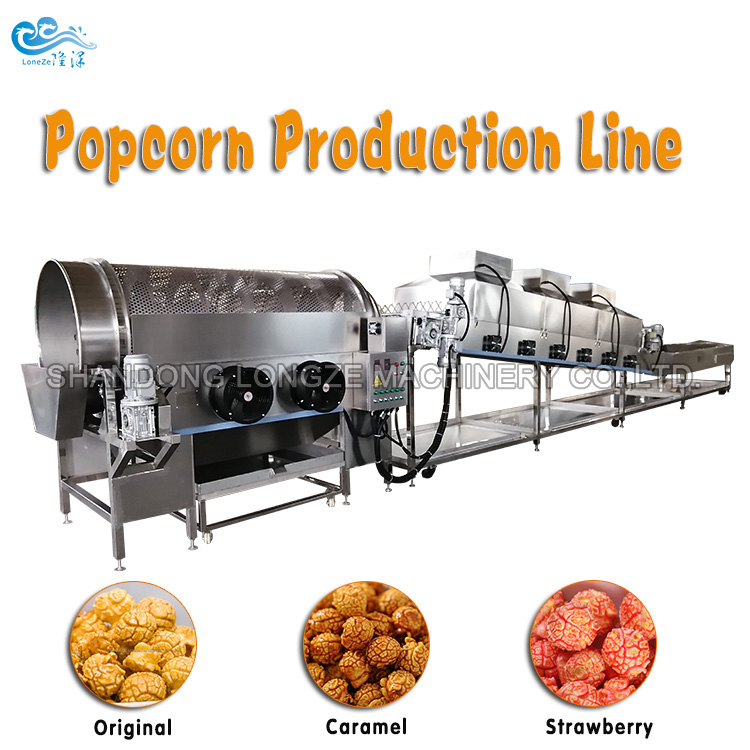
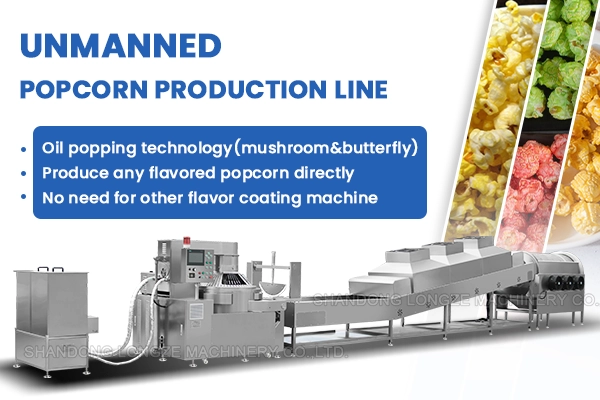
A popcorn kettle empties in batches. Watch whether the receiving conveyor spreads the discharge evenly, whether the separating section clears clusters, and how the bed cools before screening. Inspect bags from the beginning and end of each discharge for differences in clumping, breakage and fill weight. The Mosentec production-line demonstration shows the transfer, separation, cooling and screening stages to include in the trial.
For example, 120 kg/h of saleable popcorn in 50 g bags means 40 bags per minute. Test that rate with actual cooled popcorn, the intended film and your fill-weight tolerance. If production intermittently outruns packing, check whether the proposed buffer can hold a discharge without compressing the popcorn or letting caramel pieces stick together. Use our industrial popcorn production line sizing guide to work back from bags per shift.
When do two 100 L machines make sense?
Two smaller kettles can help when you need to alternate flavors, or when one kettle needs to keep running while the other is cleaned. If they feed a shared conveyor, stagger the discharges and verify that the cooler and packer can clear each batch. If you plan to run two recipes at once, specify how ingredients, discharge paths and cleaning are segregated. Compare labor, electrical capacity, floor space and cleaning time with one 200 L kettle before deciding.
What to include in a quote and acceptance test
- Send your kernel type, target caramel ratio, bag weight, required bags per shift and usable production hours.
- Share the available electrical supply, room dimensions and details of any cooler, screener or packing machine you already own.
- Ask for itemized prices for the kettle, post-processing equipment and packing. Have the supplier identify what is included in the quoted footprint and power load.
- Agree on the trial recipe, run duration, minimum packed output and acceptable levels of unpopped kernels, broken pieces and clusters. Ask for a batch log and samples from the finished run.
Send us your recipe and production target to compare a 100 L or 200 L induction popper with the downstream equipment your product requires.