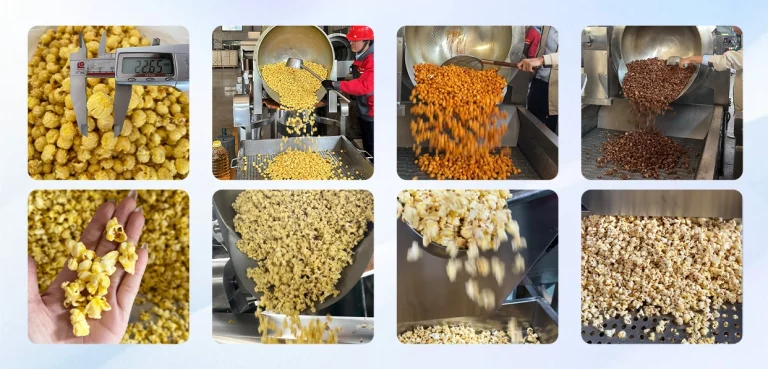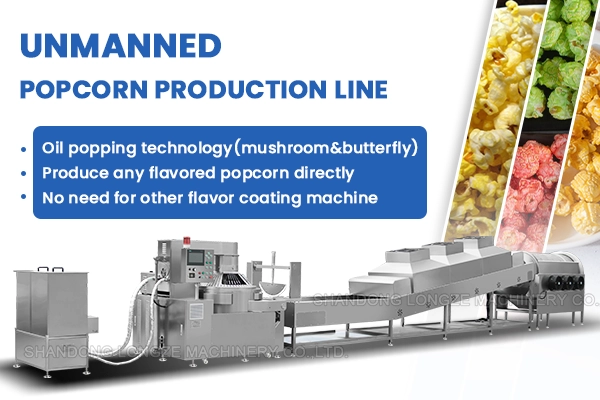
The price of an industrial popcorn production line depends on the equipment and services in the quote. A standalone popper, a processing line and a line with bagging cover different stages of the same job. For a useful budget, ask suppliers to price the same scope and use the same output target. A listing for one kettle can look cheaper even when you still need to buy the rest of the line.
Which equipment should the quote include?
Start with the product you sell. If you already cool and pack popcorn in-house, ask for a standalone gas or induction popper and confirm the discharge height and batch size. If you are setting up bagged caramel popcorn production, ask for a second quote that includes the stages needed to deliver cooled, screened product to your packer.
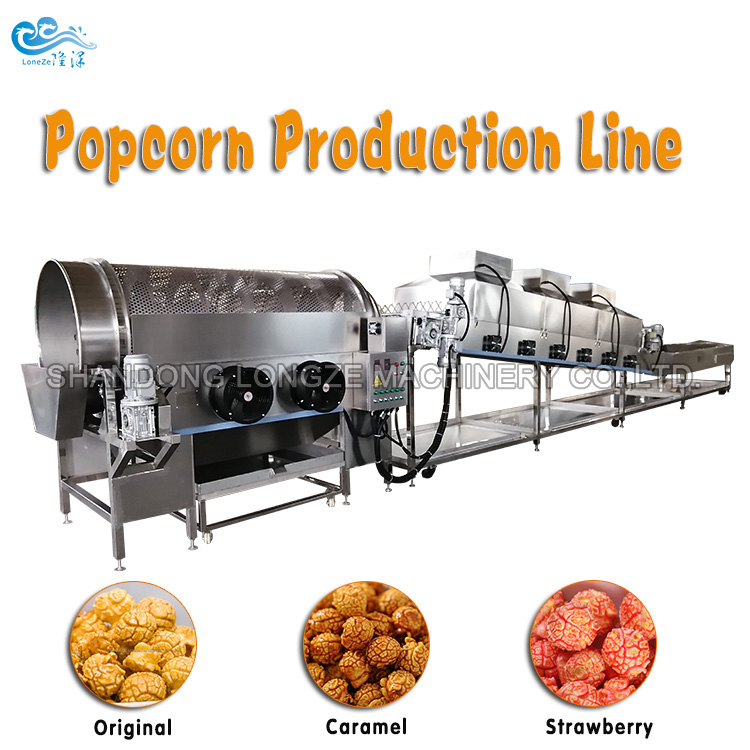
The 2025 Longze Machinery Catalog (pp. 23–24) shows a popper, a conveyor with clump separation, fan cooling and a rotary sifter. The pictured layout ends at the sifter. Ask the supplier to itemize any separate caramel cooker, coater, weigher or bagger required by your project.
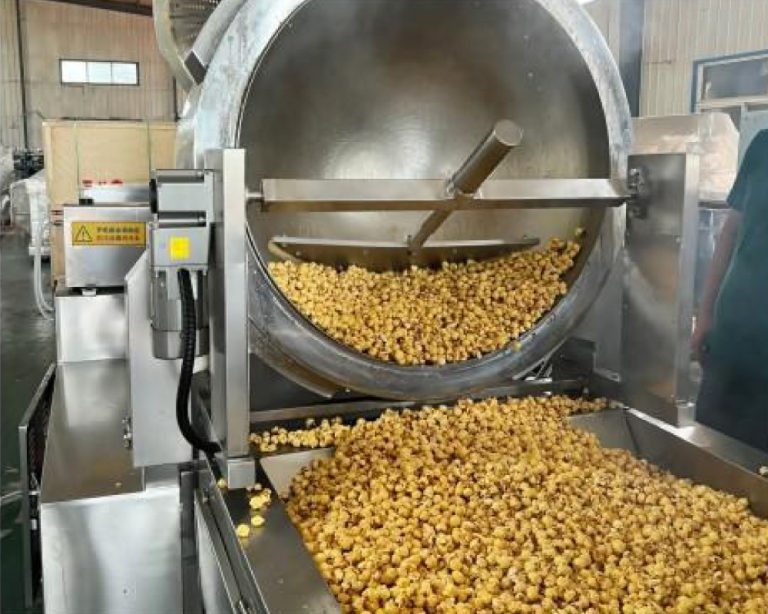
- Standalone industrial popcorn machine. Confirm the kettle size, heating method, controls, discharge and whether loading is manual or automatic. Allow for the equipment and labor that handle the product after discharge.
- Caramel popcorn processing line. Specify popping, conveying, cooling, clump separation and screening. Ask whether your recipe can be made in the kettle or needs a separate caramel cooker and coater.
- Processing line with bagging. Specify the feeder, weigher, bagger and any coding, inspection or gas-flush equipment your packaging calls for. Ask who integrates the controls and tests the whole line.
Compare the same finished output
Planning example using an assumed target of 4,800 saleable bags at 80 g net each. That is 384 kg of finished popcorn per shift. Spread over six net running hours, the target is 64 kg of saleable finished popcorn per hour and about 13.3 accepted bags per minute. Allow additional packing capacity for rejects and short stops.
Ask suppliers whether each rate refers to raw kernels, uncoated popped corn or finished product. With caramel, coating adds weight while unpopped kernels, fines and packaging rejects reduce saleable output. A popper rating alone cannot tell you how many finished bags you will get. Use the popcorn line sizing guide to work backward from your own shift target.
Ask for the installed cost
Request an itemized equipment quote and a list of buyer-supplied items. Confirm the trade term and named place so you can see who pays for export packing, freight, delivery and unloading. Budget separately for any duties or taxes, utility connections, ventilation, commissioning, operator training and starter spare parts. Ask whether the quote includes a layout showing the equipment footprint, access for cleaning and the direction of product flow.
For gas versus induction, ask for actual fuel or electricity consumption during a timed run with the same recipe. Divide the energy cost for the run by the kilograms of saleable product. Use the same approach for labor, film, cleaning time and waste to see how each configuration affects operating cost.
Agree on a trial before you buy
Send the supplier your kernel type, coating recipe or target finish, bag format and desired output. Ask the supplier to record batch cycle time, weight before and after coating, screened waste, accepted bags and stops. For thick or sticky caramel, examine clumps, breakage and sealing performance after the popcorn has cooled. Ask who will repeat the agreed test during commissioning.
Send these details with your quote request
- Finished product and coating type, kernel type, bag size and bag format.
- Target saleable bags per shift, net running hours and planned flavor changes.
- Existing equipment, available floor space, power supply or gas source, and delivery country.
- Requested scope, from a standalone popper to a processing line with packing, and the output you want the trial to demonstrate.
If you are pricing a complete project, review the Longze industrial popcorn production line and send us your production requirements. Ask for separately priced processing and packing options so you can compare the cost of buying them together or adding packing later.