If caramel popcorn reaches the bagger in sticky clumps, follow one batch from the kettle discharge to the packing infeed. Clumps already present on the receiving conveyor point you toward the coating or discharge. Popcorn that separates on the belt and sticks together later points you toward cooling or holding before packing. Where the clumps first appear tells you which change to test.
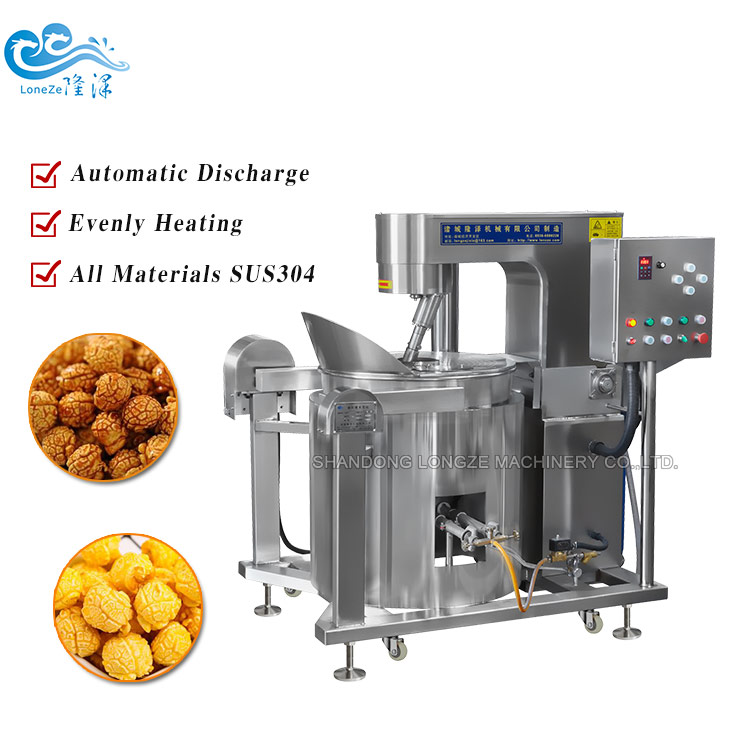
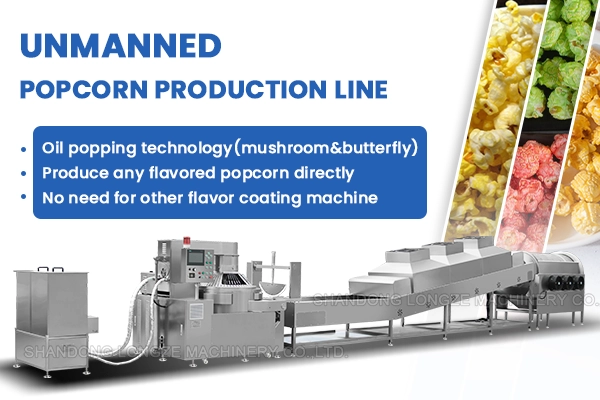
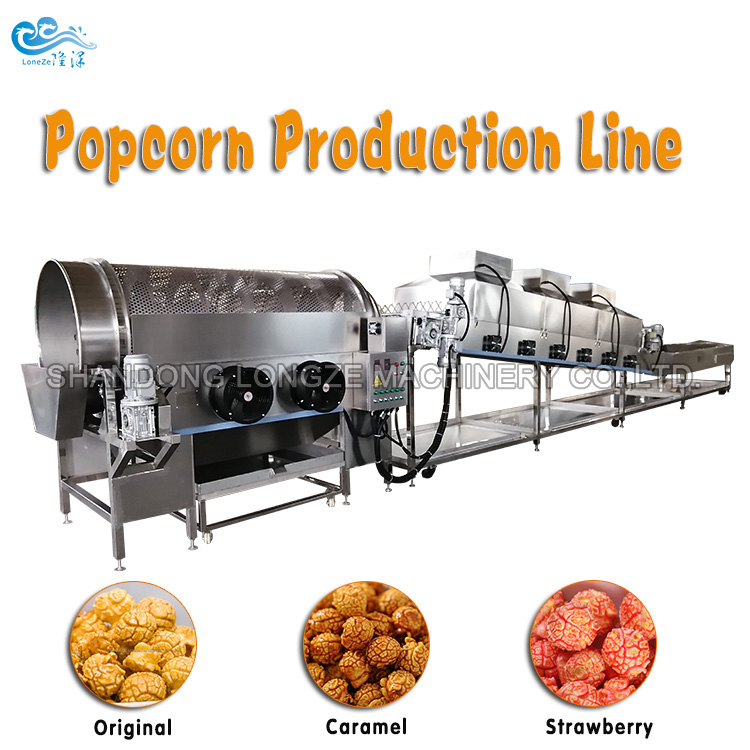
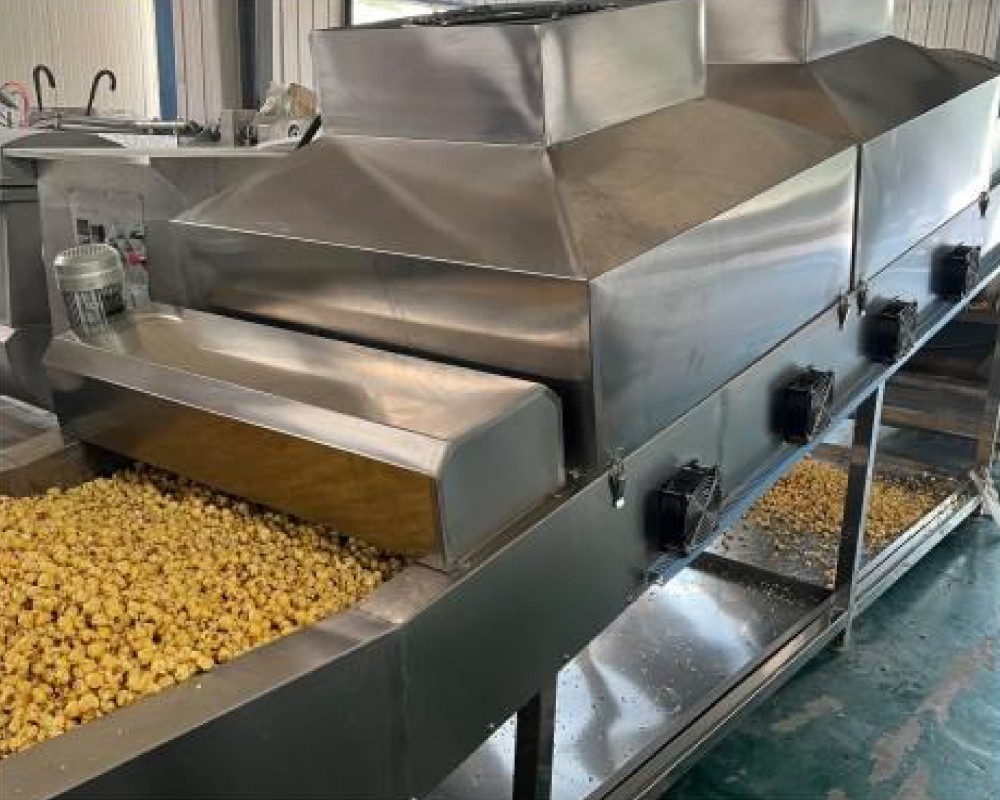
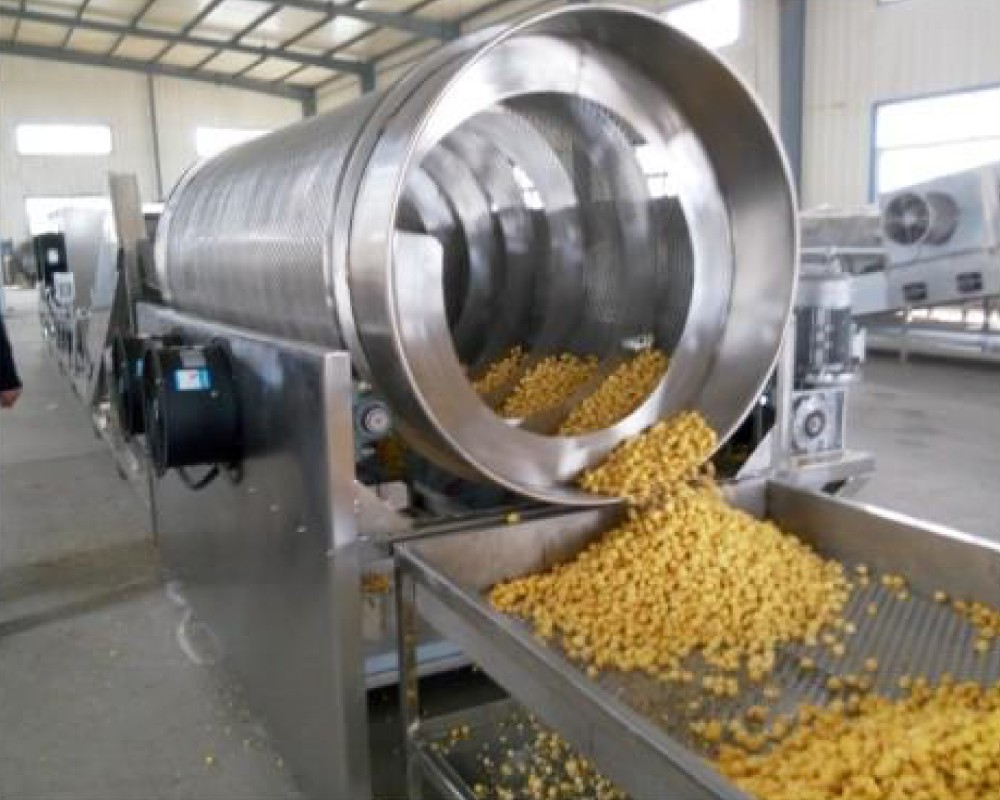
On a batch line, the kettle discharges onto a conveyor that spreads the popcorn and breaks up loose clumps. The popcorn then passes through a fan-cooling section and a rotary sifter before it reaches the packer. Check the product at each transfer to see where the clumps first appear.
Start where the clumps first appear
| What you see | Where to check | What to compare in a trial |
|---|---|---|
| Large clumps land on the belt as soon as the kettle tips. | Coating and discharge | Compare how evenly the coating is distributed, the batch weight and how the full batch spreads on the belt. |
| Pieces separate on the belt, then stick again at the cooler exit. | Fan cooling | Compare product depth across the belt and the condition of popcorn from the centre and edges. |
| The product is free-flowing at the sifter, then clumps at the weigher. | Transfer and holding before packing | Compare popcorn straight from the sifter with popcorn held for the usual wait at the packing infeed. |
Spread the discharge before adjusting the fans
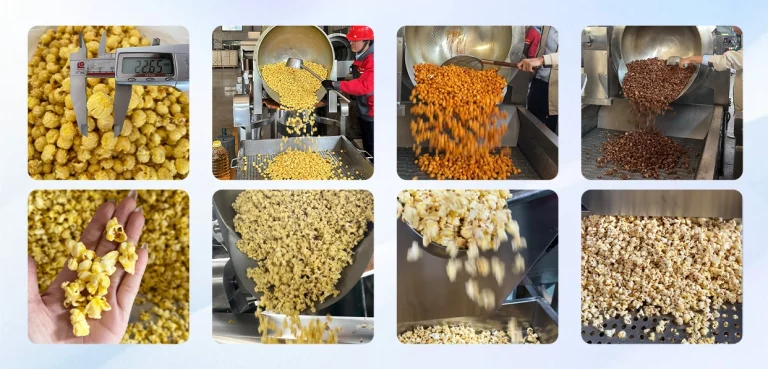
Watch a full batch tip, including the first and last part of the discharge. A deep pile can crowd the separation section and leave the centre of the bed warm and tacky. Check whether the belt receives the whole batch evenly. If several poppers share the conveyor, compare a run with staggered discharge against your normal timing. Keep the recipe the same so you can see the effect of the change.
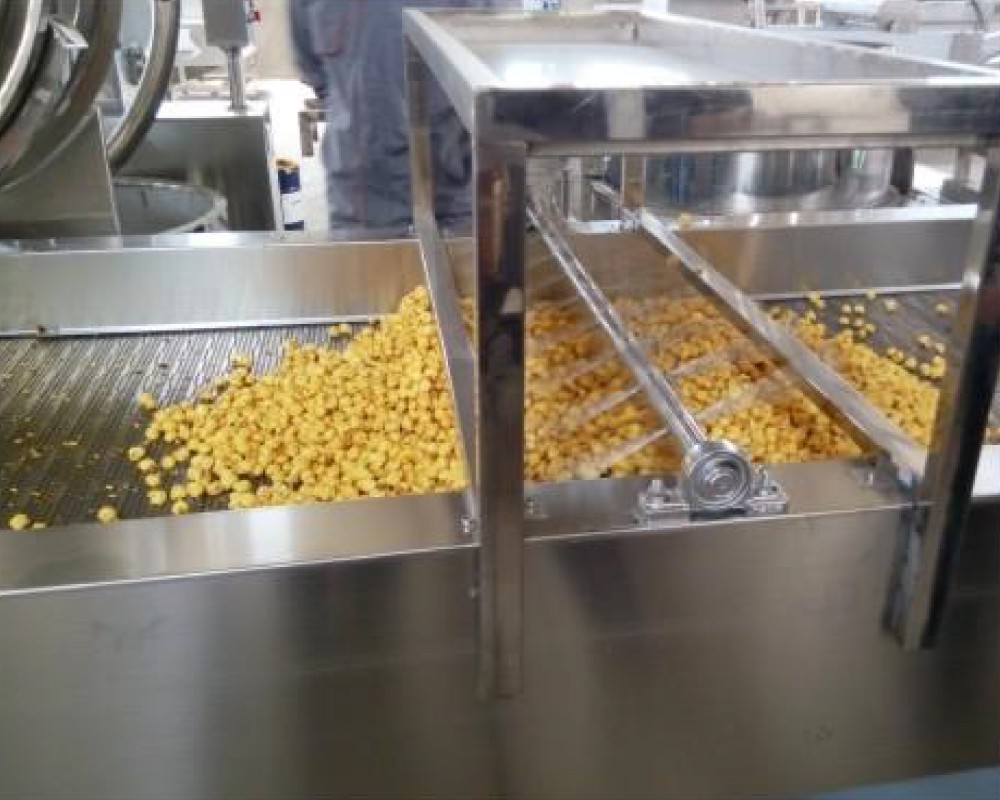
If clumps already leave the kettle, check whether the same recipe delivers an even coating from the beginning to the end of the batch. Keep a record of ingredient weights, added caramel and the full batch cycle. When evaluating a recipe that applies prepared caramel after popping, include its separate coating step in the trial.
Check cooling at the outlet under normal load
Take comparable samples from the centre and edges of the belt at the fan-cooling outlet. Record product temperature using the same method each time, and see whether pieces stick together after the typical wait before packing. If the belt speed is adjustable, change it in small steps and record both cooling time and product depth. A slower belt gives the popcorn more time under the fans. It can also let the bed build up if batches arrive at the same rate. Compare consecutive batches before deciding whether the change helps.
Use the rotary sifter to check what reaches packing
A rotary sifter can separate out undersized material such as fines and unpopped kernels, depending on the screen openings. Sample the popcorn before and after the drum and inspect the rejects. Weigh large clumps separately from broken pieces and fines. If good popcorn ends up in the rejects, check the screen size and test the drum speed where it is adjustable. If separate pieces stick together again on the way to the bagger, check the cooling outlet and the wait at the packing infeed.
Agree on the packing trial before ordering equipment
Run several consecutive batches with the intended kernel type, caramel recipe and bag size. Use the same sample weight at each station. Agree on the largest cluster the customer will accept, then record the weight of clumps above that limit as a share of each sample. At the bagger, log fill-weight variation, rejected bags and any popcorn caught in the seal. Record the accepted net kilograms and run time so you can check both quality and output.
If you already have a bagger, record its infeed height, how long popcorn normally waits there and how many accepted bags it produces per minute. For a new line, specify where the equipment scope starts and ends. Use the finished-bag sizing guide to turn your shift target into the output you need to verify during the trial.